
March 4th, 9h30 - FCUL, Room 6.2.56
The aim of this event is to illustrate the importance of interdisciplinarity. To do so we bring together researchers from different areas who work in interdisciplinary fields. Finally, the event aims also to boost new collaborations.
This event is the fourth of a series. The first two were entitled “Pontes entre biologia, estatística, informática e matemática”. Due to the success of these events we decided to extend to all the scientific areas of our faculty.
The official language of the meeting is English.
Target audience: Third year undergraduate, Master and PhD students and all the researchers of CIÊNCIAS interested in interdisciplinarity.
Poster Session: If you have an interdisciplinary original work and want to submit a poster you should register until: Feb 26th. There will be a commission which will select the best poster.
Instructions for the posters
- The poster must feature original work.
- Poster size: A0, portrait.
- Presenters will have 2 minutes to introduce their poster (English) before the poster's session. This presentation is limited to 2 slides: slide 1-title and authors; slide 2 - free content.
- Please submit your 2-slide presentation by March 2nd (two days before the meeting) to fdionisio [at] fc.ul.pt
- All mounting materials will be provided by the organizing committee.
- Posters must be installed between 9:00 and 9:40, before the opening session and should be removed at 17:00, following the closing session.
Registration is free but mandatory. Deadline for registration: Feb 26th
| 9h | Set up posters |
| 9h40 | Opening (Chair: Carlota Gonçalves) |
| 9h45 | Welcome Address by Conceição Freitas (Director of CIÊNCIAS) |
| Session 1 (Chair: Cátia Pesquita) | |
| 10h | Hitchhiker’s Guide to Interdisciplinary Research, Tiago Marques |
| 10h30 | Flash Talks by poster presenters |
| 11h30 | Coffee Break + Posters |
| Session 2 (Chair: Francisco Dionísio) | |
| 12h | From Data to Knowledge: The Role of Statistics in Interdisciplinary Research, Lisete Sousa |
| 12h30 | The Power of Fundamentals, Francisco Lobo |
| 13h | Lunch |
| Session 3 (Chair: Lisete Sousa) | |
| 14h30 | Recommendation Systems for Scientific Items, Márcia Barros |
| 15h | A research agenda for decarbonization, CDR and resilience in overshoot transition pathways, Alexandre Köberle |
| 15h30 | Coffee Break + Posters (Voting for Best Poster Award) |
| Session 4 (Chair: Carlota Gonçalves) | |
| 16h | Keynote Speaker: Carnivore Conservation in the Anthropocene: Why Biology Is Not Enough, Margarida Santos-Reis |
| 16h40 | Best Poster Awards (Chair: Tiago Marques) |
| 17h | Closing |
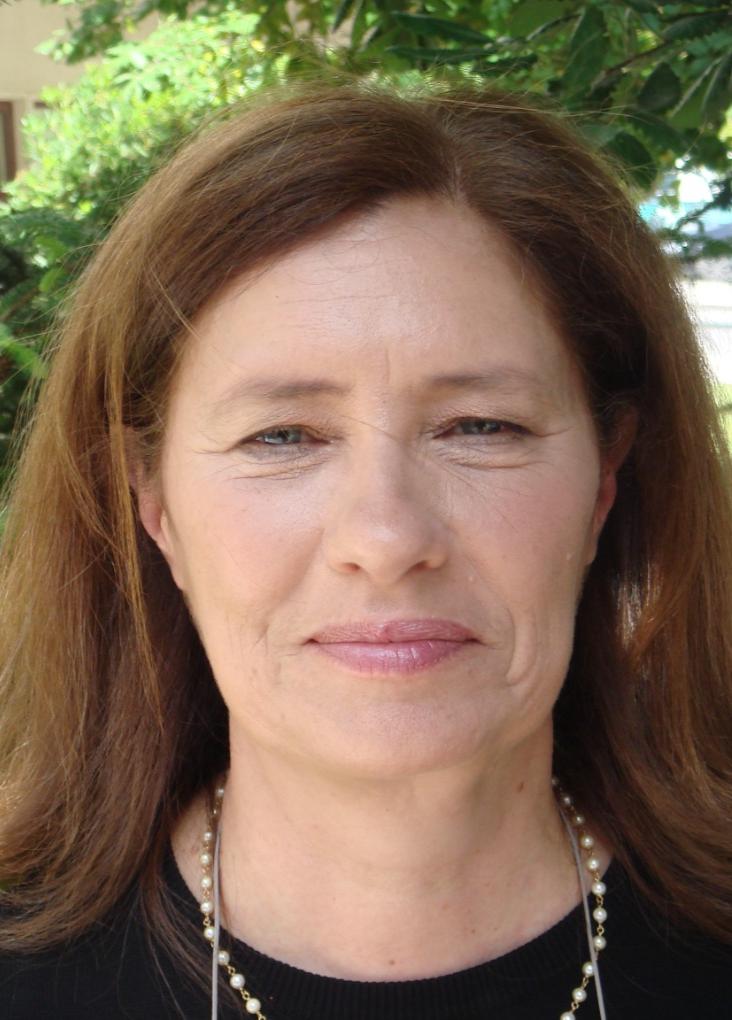 |
Margarida Santos-Reis Centre for Ecology, Evolution and Environmental Changes, FCUL |
|
|
Carnivore Conservation in the Anthropocene: Why Biology Is Not Enough
Carnivore conservation in the 21st century faces an unprecedented challenge: 75% of Earth's land surface has been significantly altered by humans, almost 50% species (77% if we consider only large carnivores) are declining globally, and the vast majority now live outside protected areas. In this human-dominated Anthropocene, biological science—while essential—is insufficient for successful conservation. Biological knowledge provides the foundation: understanding population genetics, habitat requirements, and predator-prey dynamics. However, implementing conservation requires integrating multiple natural sciences. Earth sciences offer climate modeling, terrain analysis, and GIS mapping of habitats. Mathematics enables population modeling and spatial analysis. Physics provides GPS telemetry and remote sensing technologies. Chemistry contributes stable isotope analysis and toxicological assessments. Computer science delivers machine learning algorithms, AI-powered image recognition for camera traps, and big data analytics. History establishes baseline conditions and reveal millennia of human-carnivore coexistence. These disciplines together provide mechanistic understanding of how carnivores function. Yet even comprehensive natural science knowledge cannot address the human dimensions that ultimately determine conservation outcomes. Socioeconomic factors dominate: e.g. predation impacts on livelihoods. Cultural perspectives vary dramatically—carnivores may be revered as sacred or vilified as threats. Political will determines whether laws translate into enforcement. Community engagement versus top-down approaches yield vastly different results. Effective carnivore conservation requires therefore true transdisciplinarity. Biology tells us what carnivores need to survive. Social science tells us what humans need to coexist with them. Economics provides tools to align incentives. Policy creates the framework for action. Success demands all four working together—integrated, adaptive, and locally responsive. In the Anthropocene, conservation is fundamentally a human challenge that requires us to be as capable in understanding human systems as we are in understanding ecological ones. Margarida Santos-Reis is a researcher at the Centre for Ecology, Evolution and Environmental Changes (CE3C) and a former Full Professor of the Biology Department at CIÊNCIAS. A member of CE3C since its inception, she previously served as Coordinator and Leader of the Conservation Ecology Research Group. She received her PhD in Biosystematics and Ecology from the University of Lisbon and is the national representative of the eLTER Network - Integrated European Long-Term Ecosystem, critical zone and socio-ecological Research. Her research focused mainly in conservation ecology, with an emphasis on mammals (particularly carnivores). However, along the years her interests have expanded to themes more inter-disciplinary such as human-wildlife conflict, sustainability of the cork-oak ecosystem, conservation of Mediterranean landscapes and ecosystem services. She has authored over 150 peer-reviewed articles and several books, supervised numerous graduate students and postdoctoral researchers, and secured substantial external funding. |
||
 |
Tiago Marques University of St Andrews; Biology Department and Centre of Statistics and its Applications at FCUL |
|
|
The Hitchhiker's Guide to Interdisciplinary Research
To open up the day, and based on his personal experience - as a researcher in between two subjects, ecology and statistics - as well as those of the day's organizers, Tiago will explore what is interdisciplinary research, why is it important, what makes it work, and does not, concluding with some questions that hopefully will spark a lively discussion with the audience. Tiago Marques is a Principal Research Fellow at University of St Andrews (UStA) working on ecological statistics, namely estimating animal abundance, focusing nowadays on passive acoustic density estimation. He is also an Invited Associate Lecturer in the Biology Department at Faculdade de Ciências da Universidade de Lisboa, teaching statistics to biologists at the under and postgraduate level. Living in a country and working in two, a biology major with an MSc and PhD in Statistics, teaching statistics in a biology department but conducting research in a statistics department and research center(s), his life/work is almost entirely interdisciplinary. He is interested in the dissemination of statistics and argues that statistical literacy is fundamental for modern citizenship. |
||
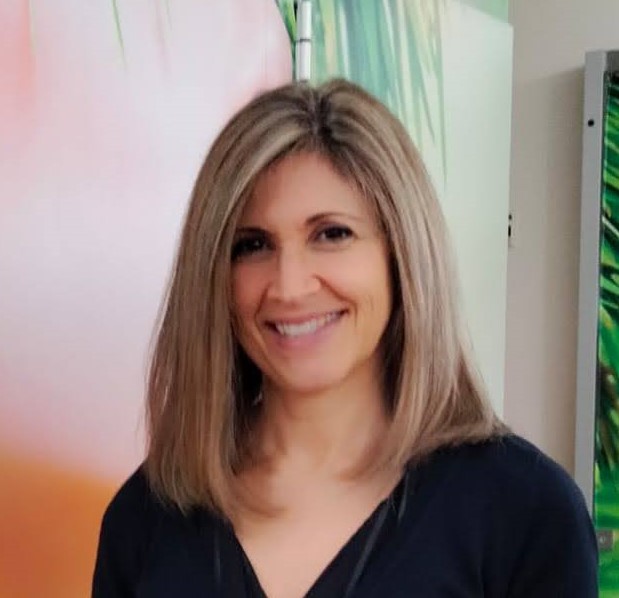 |
Lisete Sousa Centre of Statistics and its Applications and Department of Mathematical Sciences at FCUL |
|
|
From Data to Knowledge: The Role of Statistics in Interdisciplinary Research
Statistics lies at the heart of contemporary scientific research, providing the framework through which data are transformed into reliable knowledge. As studies become increasingly complex and data-driven, statistical reasoning is essential for structuring research questions, guiding analysis, and supporting robust interpretation of results. Far from being a purely technical contribution, statistics functions as a shared language across scientific fields, promoting rigor, transparency, and meaningful collaboration. Drawing on collaborative work with researchers from the faculty and beyond, this presentation highlights how statistics enhances scientific work by adding rigor, coherence, and significance, ultimately supporting more robust and impactful research. Lisete Sousa is an Associate Professor in the Department of Mathematical Sciences at FCUL. Her research focuses mainly on the statistical analysis of high-dimensional omics data, addressing challenges such as normalization, feature selection and classification. This work includes the development of statistical methodologies grounded in Bayesian classification, EM algorithm, permutation tests, as well as the visualization tool Arrow Plot. She served as Director of the Centre of Statistics and its Applications (CEAUL) from January 2017 to December 2022 and is currently Vice-Director of CEAUL and Vice-President of the Portuguese Statistical Society (SPE). |
||
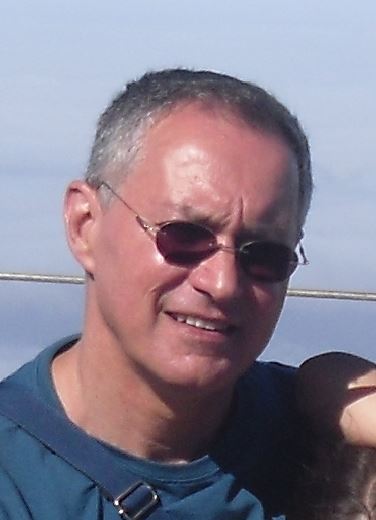 |
Francisco Lobo Institute of Astrophysics and Space Sciences and Physics Department at FCUL |
|
|
The Power of Fundamentals
Fundamental research represents humanity’s deepest expression of curiosity: the pursuit of understanding driven not by immediate utility, but by the desire to ask fundamental questions about nature and reality. While often perceived as abstract, such inquiry has repeatedly laid the groundwork for profound technological and societal transformations, while also cultivating critical thinking, creativity, and intellectual resilience. Beyond its practical impact, the power of fundamentals affirms the intrinsic value of knowledge and sustains the human spirit of exploration. In this talk, we will address these themes through the lens of fundamental physics, placing them within a broader interdisciplinary context. Francisco Lobo is a researcher at the Institute of Astrophysics and Space Sciences (IA) and Professor with Habilitation at FCUL. A member of IA since its inception, he previously served as Coordinator and Leader of the IA Cosmology Group. He received his PhD from the University of Lisbon in 2005 and is a member of the Euclid and LISA Consortia. His research focuses on cosmology, gravitation, and quantum field theory. He has authored over 290 peer-reviewed articles and two books, supervised numerous graduate students and postdoctoral researchers, and secured substantial external funding. His distinctions include several Ciências Research Awards at FCUL, inclusion among the world's top 2% of scientists (PLOS Biology) during the period 2017-2024, and the 2021 Scientific Prize of the University of Lisbon/Caixa Geral de Depósitos in Physics. |
||
 |
Márcia Barros LASIGE, Faculty of Sciences, University of Lisbon. |
|
|
Recommendation Systems for Scientific Items
Recommendation Systems (RS) have long been used to suggest commercial items of interest to users, such as movies, music, and products in e-commerce platforms. In recent years, RS have increasingly supported researchers in navigating large, complex, and rapidly growing bodies of scientific knowledge. Unlike traditional applications, scientific RS are designed to recommend domain-specific items such as genes, chemical compounds, groups of stars, or microbial species, often under constraints including data sparsity, strong domain specificity, and high precision and reliability requirements. These systems commonly integrate content-based, collaborative filtering, and knowledge-based approaches, frequently augmented by domain ontologies, semantic representations, and structured scientific metadata. By improving information discovery, reducing cognitive overload, and enabling more efficient and reproducible research workflows, RS contribute to accelerating scientific discovery and innovation.This presentation introduces the fundamental concepts and definitions of recommender systems, discusses recent advances and trends in RS for scientific data and items, and presents several representative works developed at Ciências, highlighting practical applications, research challenges in this domain, and demonstrating the multidisciplinary nature of the field. Márcia Barros is currently an Assistant Professor at the Department of Informatics, Faculty of Sciences, University of Lisbon (Ciências ULisboa) and an Integrated Researcher at LASIGE. Márcia holds a degree in Biomedical Sciences (Universidade da Beira Interior, 2012), a master's degree in Legal Medicine and Forensic Sciences (Universidade de Coimbra, 2014), and a PhD in Informatics (Universidade de Lisboa, 2022). Her main research areas include Recommender Systems, machine learning, artificial intelligence, biomedicine, and astronomy. |
||
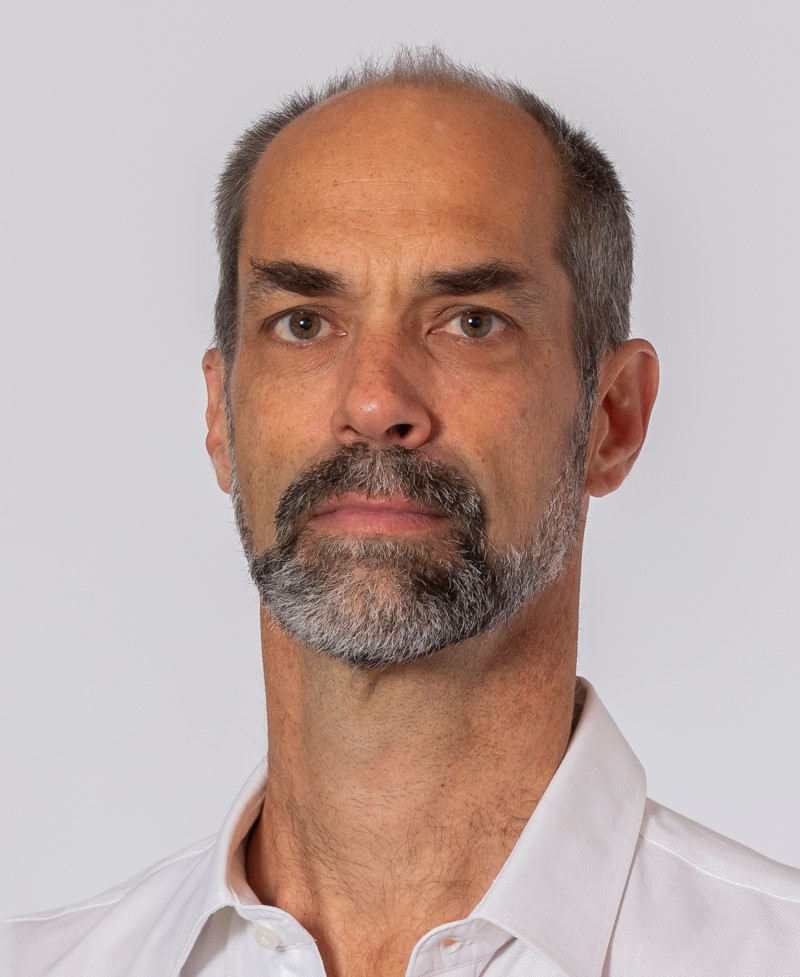 |
Alexandre Köberle Instituto Dom Luiz, Department of Earth Sciences and Energy, FCUL |
|
|
A research agenda for decarbonization, CDR and resilience in overshoot transition pathways.
As global emission reduction efforts remain insufficient to meet the Paris Agreement target, the climate discourse is increasingly forced to confront the reality of "overshoot." This talk outlines a critical research agenda for exploring pathways that temporarily exceed global warming limits before utilizing large-scale Carbon Dioxide Removal (CDR) to return to safer levels. At the heart of this exploration are **Integrated Assessment Models (IAMs)**, which serve as the primary tools for linking socio-economic, energy, and land-use systems with climate physics. However, the current generation of IAMs faces significant hurdles in "endogenizing" climate impacts—that is, moving from treating climate damage as an external factor to an internal feedback loop that influences economic growth and mitigation capacity. We will examine the methodological challenges that currently limit the utility of these models, including: Data Gaps and Uncertainty, Tipping Points and Valuation Dilemmas. By identifying these gaps, this talk proposes a new research frontier that prioritizes the integration of resilience and damage modeling. The goal is to develop more robust overshoot pathways that acknowledge the high-stakes trade-offs between delayed decarbonization and the massive, unproven scales of CDR required for a late-century recovery. Dr Alexandre Köberle's research focuses on long-term scenarios of socio-environmental change, with special focus on nexus approaches to explore transitions to alternative sustainable development futures. His interdisciplinary work uses mathematical models to develop plausible scenarios useful for stakeholders to not only enable the transition but also to identify risks and opportunities for improved human welfare and environmental sustainability. He is particularly interested in transformative systems approaches exploring nexuses across sectors and disciplines such as nature-food-finance or climate-land-energy-water and emerging trade-offs and synergies with sustainable and inclusive development objectives. Alex published close to 60 articles in peer-reviewed journals, over 20 of which in high-impact journals like Nature, Nature Climate Change, Nature Food, Nature Communications and One Earth. He is a Lead Author in the IPCC 7th Assessment Report (WG3). He was Lead Author in AR6 WG3 and a Lead Author in the 6th UNEP Global Environmental Outlook reports. |
||
 |
Carlota Rebelo (DCM) |  |
Francisco Dionísio (DB) |  |
Cátia Pesquita (DI) |  |
Margarida Santos Reis (CE3C) | |
Lisete Sousa (DCM) |
|
Tiago Marques (UStA, DB) |  |
Marta Silva (LASIGE/DI) |
 |
Madalena Gonçalves (BSc Matemática Aplicada, DCM) |
 |
Matilde Guilherme (BSc Estatística Aplicada, DCM) |
 |
Pilar Lobo Antunes (MSc Biologia da Conservação, DB) |
 |
 |
 |